Tags

Archiving from Below

Monthly Discussion Group 


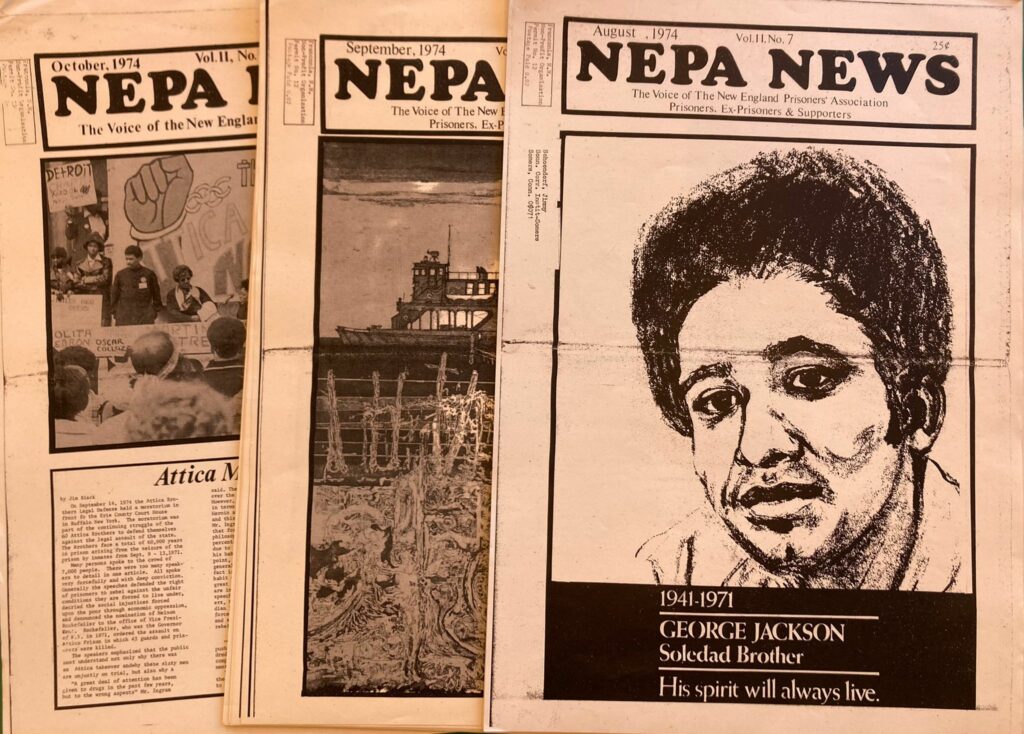
In our day, the traces of our radical movements are being thrown into rubbish pits, as state-sponsored “austerity” demands the commodification of every inch of space, and with sinister intent destroys the evidence of our past, its joys, its victories. Clear out the closets, empty the shelves, toss out the old footage, shred the underground press, pulverise the brittle, yellowing documents! Thus neoliberalism organises the transition from the old to the new; they must silence alternatives. We do not want the voice of George Jackson to be silenced. His words still eloquently describe a desirable program, a necessary program.

Peter Linebaugh, Archiving at the MayDay Rooms


Since its inception, MayDay Rooms has been built on the principle of archiving from below, challenging the conventional institutional methods of gathering, shaping, and disseminating the history of struggles.

After over a decade of archiving, we are launching a reading and discussion group to address the practices of archiving from below and strategies of activating the histories of resistance. 

The group is open to archivists, researchers, historians involved in both past and present organising, and anyone interested in radical archives. Our aim is to share our own approach, learn from each other, and collaboratively develop counter-archival practices that extend beyond mere critique.

The first session will introduce the idea of archiving from below, followed by a discussion about our future sessions. This will provide an opportunity to invite speakers and suggest readings and topics for these sessions.

To give an idea of the topics and areas for discussion, they range from History from Below to Archiving from Below, archiving marginal histories, moving towards an archival ‘commons’ and against institutional enclosure, using archives as preservation, exploring archives of archives, digital gleaning and autonomous online repositories, different methods of archiving struggles, and strategies for connecting radical histories to contemporary struggles, among others.


Previous Archiving From Below Public Sessions:


A screening of award-winning film, The Ban, followed by a practical guide to working with film archives with director Roisin Agnew. Cautionary tales and a personal trial and error understanding of copyright law, broadcasters, online platforms, and media solicitors. 

The Ban – 27 minutes

During the conflict in the north of Ireland a practice developed that saw actors hired to dub those associated with the IRA on broadcast media. Via unseen archive footage and present-day interviews with key figures such as Gerry Adams, The Ban reflects on the British government’s use of the threat of ‘terrorism’ to justify censorship.

Roisin Agnew is a London-based Italian-Irish filmmaker and researcher. Her last film, The Ban, was longlisted for a BAFTA. She’s a PhD student at Centre for Research Architecture, Goldsmiths and an Associate Lecturer at the London Film School.


In this session, Chris from 56a Infoshop archive will talk about their 30+ years journey into ‘making it up as you go along’ archiving. Rather than focussing on the history of the archive, the talk will look at how the materials in the collection are sometimes presented and used:

What is it you hold when you hold an old feminist mimeograph?
What is it you connect to when you look at a dozen squatted cafe flyers?
What happens when you take the archive for a walk outside?

Chris will be bringing a mystery object: five different editions of the same text re-published hither and thither from the 70s to the 2010s for us to pore over and ask questions about! 

From those different versions we can look at the sensuous nature of counter-cultural production (collective decisions, radical print shops, formats, technological pleasures etc.), why texts endure and why we keep different versions of the same text in our archive. There will inevitably be some talk of  ‘materiality’ and what happens when we hold in our hands something from the archive. It’ll be fun!

Forward to the past!


“African cinema quotes itself. This is a sign that it now has a history.” Férid Boughedir

We are very excited to welcome June Givanni and Onyeka Igwe to our next Archiving from Below event, where they will discuss their different experiences of working with, encountering, and building archive collections that foreground marginalised histories and develop radical approaches to archiving itself.

June Givanni is a pioneering international film curator who founded the June Givanni Pan-African Cinema Archive, based on her collections from years of working in the field of cinema. She recently won a BAFTA for her contribution to cinema.

Onyeka Igwe is a filmmaker, writer, and researcher who works extensively with archival collections. She has most recently written a book about June Givanni and JGPACA, titled June Givanni: The Making of a Pan-African Cinema Archive, published by Lawrence and Wishart.

There will be a curated display highlighting collections from the June Givanni PanAfrican Cinema Archive that have shaped and inspired their respective approaches to engaging with and contributing to a PanAfrican cinema history through research, writing, curation and moving-image. 

Collections: Third Eye: London Third World Cinema Festival, The Pan-African Film and Television Festival of Ouagadougou (FESPACO), Images Caraïbes and Celebration of Black Cinema

Sign up here


As part of a continuing “Archiving from Below” series, this session is to explore how concepts and practices associated with a method of militant research known as a “workers inquiry” might connect to and open up questions around our own archival contexts and labours.

The session will think through what  “archival inquiry” might constitute, and how we might build on an approach of “co-research” that seeks to foreground and actively bring together both 1) a workers’ inquiry of the archives and often invisibilized archival labours (in and across different types of institutional and social movement contexts) and 2) a method of politicized archival research that takes a relational approach to the past and future, “co-research”-ing with social movement materials and histories and in relationship to ongoing or current political questions and concerns.

This session will take a more open and interactive format, providing time and space to brainstorm and work through ideas and issues together.

This session is especially geared towards archivists and researchers working within archives, but all are welcome!

Sign up here


Sooner or later everything gets recuperated by our political enemies. Despite their warnings even the situationists were unable to escape this fate. Obviously, we don’t give up on militant ideas despite their capture, however we do need to take account of practices and tactics that we inherit from past movements, so as to assess their utility against present needs and constraints.

In this sense movement archives are not only repositories of communist history but can act as a way of constructing an inventory of the present movement. While archives often illuminate the intellectual history of the communist movement(s) – their theoretical and ideological debates, their statements, their policies and their campaigns –  they also contain a record of practices- the strategies and tactics that animated everyday activity.  As such, archives are a vital resource for the living movement. They are a toolbox – containing a wide range of tactics and strategies that must be unearthed and tested against our present realities.

How then can archives be structured to achieve this aim?


In All Knees and Elbows, published in 2012 Tom Roberts and Anthony Iles attempted to recover and politically and critically survey the work of historians contributing to practices of reading and writing ‘history from below’. 

If we articulate the ‘below’ as populated by creatures marked by material processes of differentiation through race, class and gender, then ‘from’ and ‘reading’ designate methods of recovering and centring their lives and experience. To show these are material matters, one way we characterised historical disjecta was as ‘lobster traps’, that is E.P. Thompson’s phrase for the peculiar devices of capture where the historian might find and hear the voices of the unheard articulate themselves. 

During this session of Archiving from Below, Anthony will present some arguments and examples from the book – focusing on class, historical evidence and methods – in order to animate a discussion about where we might begin to look and listen for the ‘below’, then, today and tomorrow?


For the first Afb session we will be watching and discussing Johan Grimonprez’s dial H-I-S-T-O-R-Y, alongside archival videos from MayDay Room’s video archive Activist Media ProjectWe will explore how video, newsreels, television, and endless streams of moving images on social media of direct action can be archived in ways that create sites of production and can serve as a resource for engaging with critical fragments of history.

We also highly recommend going to see Grimonprez’s current film Soundtrack to a Coup d’Etat


Drawing on an oral history project from MayDay Radio, this session will explore the history of the Claimants Union movement, a radical, grassroots initiative led by and for organised benefits claimants active in Britain during the 1970s and 1980s. At its peak, the movement consisted of around 100 autonomous local branches across the country, coordinated through a national federation.

Georgia and Cathy will discuss how they explored the history of the movement through oral histories with former activists and the crucial role that radical and community archives played in preserving its legacy.


Archive Stories look at how we can work with creative and non-traditional archives. The project wants to create a space for conversations about archiving beyond institutional archives, and to think through the possibilities that emerge when we imagine the archive as expansive and as encompassing everything around us.

What does it mean to work with creative archives like music, food, or film? How does someone begin working with archives like these? How might we come across unexpected archives when we expand what ‘archive’ means? Approaching archiving as a practice, rather than a finished product opens up space to think about the many ways in which history is remembered and recorded.


Drawing on the first English language version of the Swedish author and activist Sven Lindqvist’s influential 1978 workers’ radical history manual (Dig Where You Stand 2023, Repeater Books, ed. by Andrew Flinn & Astrid von Rosen), this discussion will introduce the philosophy and practice embedded in Lindqvist’s workers’ DIY history manual, reflect on its continuing relevance (and also some challenges), and in particular make the connection of ‘Digging’ with independent community-led archiving, and in line with Lindqvist’s urgings connect movements researching and utilising history as suggested by Aziz Choudry and others.

Suggested readings for the session: 
Sven Lindqvist’s* Dig Where You Stand* in Oral History 1979, 7(2), 24–30 
https://maydayrooms.org/wp-content/uploads/2024/10/Lindqvist-OH-DWYS-1979.pdf

An Introduction to the English Translation of Dig Where You Stand, by Andrew Flinn and Astrid von Rosen
https://www.3ammagazine.com/3am/an-introduction-to-the-english-translation-of-dig-where-you-stand/

Skip to content